The DJI Osmo Pocket 4P redefines portable mobile filmmaking as the industry’s first handheld gimbal to integrate a high-end dual-lens imaging architecture.Engineered specifically for elite-tier vlogging, cinema-style content production, and robust run-and-gun storytelling, it introduces sweeping technological advancements over standard compact setups. By packing Hollywood-adjacent imaging capabilities into a tiny footprint, it serves as an uncompromising standalone production kit.
Evolutionary Dual-Lens Module
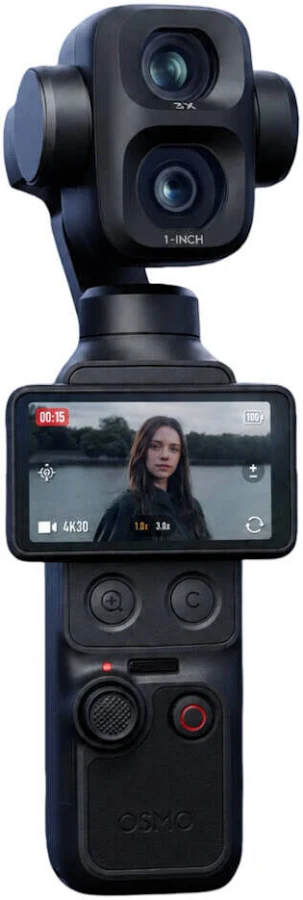
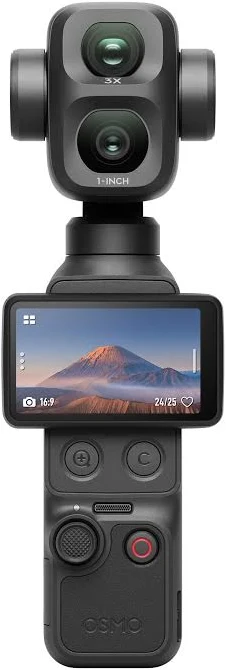
The defining hallmark of this flagship model is its revolutionary dual-camera module, bridging the gap between ultra-wide tracking and cinematic telephoto compression. The primary lens utilizes a custom 1-inch sensor configured to a wide 20mm focal length, which is optimal for traditional vlogging, scenery capturing, and expansive selfie-style angles. Sitting parallel is the telephoto camera, utilizing a 1/1.28-inch sensor at a 60mm equivalent focal length to produce 3x native optical zoom and up to 12x hybrid zoom. This configuration allows creators to instantly compress backgrounds, achieve natural physical bokeh, and draw precise focus to subjects without moving the physical chassis.
Cinema-Grade Dynamic Range & D-Log 2
Equipped with massive architectural upgrades, the main sensor introduces an exceptional 17 stops of dynamic range. This level of exposure latitude allows the camera to comfortably retain intricate highlight data in harsh overhead sunlight while resolving subtle detail in deep, complex shadows. Paired with this hardware is DJI’s newly engineered D-Log 2 color profile, intentionally optimized to protect mid-to-high brightness details and human skin tones. For high-end workflows, the recorded 10-bit flat footage can be matched with a specialized transformation LUT directly into standard cinema workspaces like ARRI Log C4 for uniform color grading.
Framerates and Slow-Motion Performance
When it comes to processing power, the Pocket 4P accommodates high-speed capture across both embedded camera systems. Under standard operating parameters, the device captures exceptionally clean 6K video at up to 60fps or detailed 4K at 60fps for seamless day-to-day shooting. For high-action sports or dramatic cinematic interludes, the primary sensor records ultra-smooth high-framerates at 4K/240fps. Not to be outdone by a smaller frame size, the secondary 60mm telephoto lens can capture slow-motion sequences up to 4K/200fps, establishing its prowess as a multi-focal slow-motion powerhouse.
Mechanical Stabilization & Form Factor
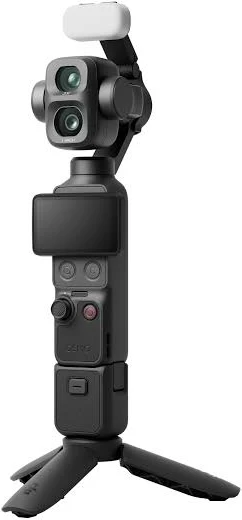
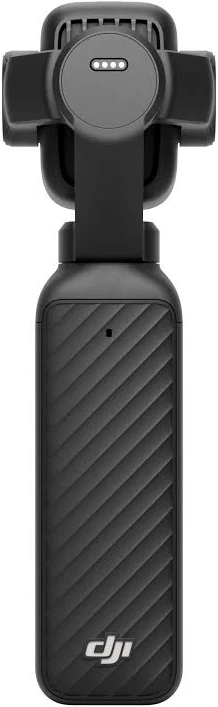
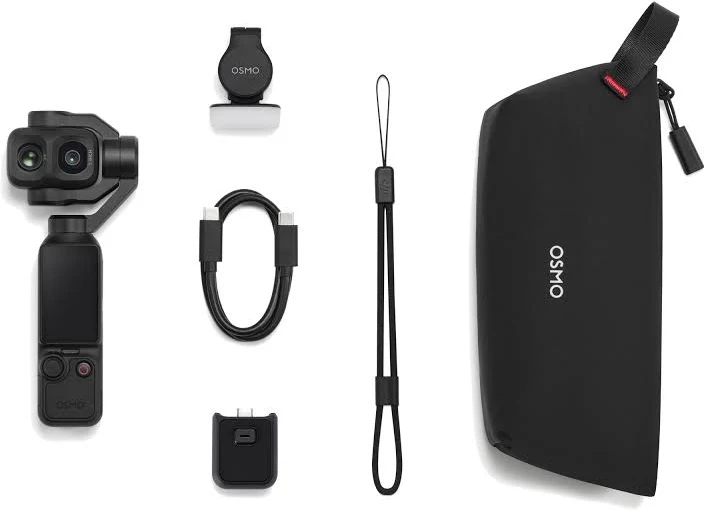
True to its lineage, the handheld relies on a highly responsive 3-axis mechanical gimbal structure that actively counters real-time walking, running, and panning vibrations. To accommodate the advanced dual-lens cluster, the physical head has been slightly enlarged, pushing the total weight of the device to 230 grams. Instead of reliance on friction clips or external holders, the camera utilizes an automated self-locking three-axis mechanism that holds the gimbal safely in place during storage. Additionally, the glass elements are fully protected by an integrated mechanical sliding latch built onto the primary head.
Smart Follow 8.0 & Tracking Intelligence
Subject tracking receives a comprehensive foundational overhaul with the deployment of Smart Follow 8.0, powered by on-device AI algorithms. This system is uniquely calibrated to handle tracking across the full spectrum of focal lengths, allowing the camera to maintain lock-on precision even at 6x and 12x zoom levels. Users can choose from customized tracking models, including a dedicated Protagonist Follow Mode that anchors onto a single individual in dense, crowded environments. The tracking system is advanced enough to map multiple faces, balancing focus and skin-tone priority across various lighting fields.
Rotatable Display & User Interface
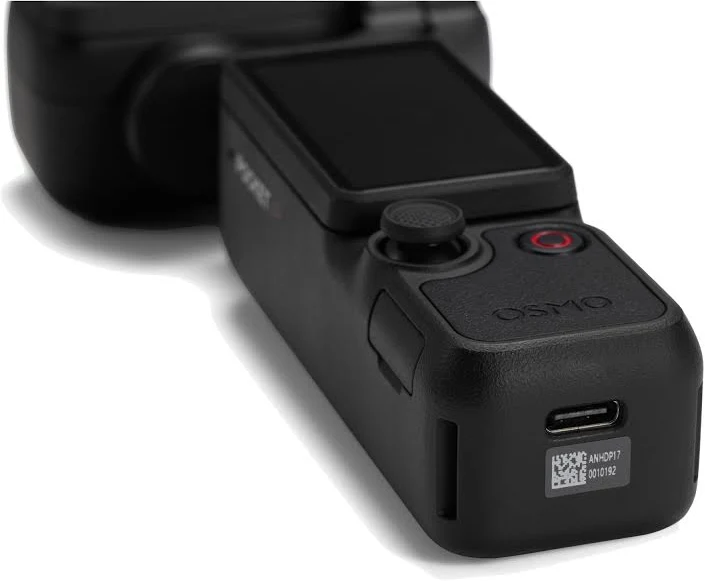
The physical interaction is centered around an improved 2.0-inch rotatable OLED touchscreen display, pushing out up to 1,000 nits of peak brightness for easy daytime viewing. Flicking the screen from a horizontal to a vertical orientation boots up the camera instantly and swaps between standard widescreen and mobile-first vertical aspect ratios. The software UI relies on directional swiping: swiping down opens master control layouts, swiping up alters resolution or frame rate metrics, and swiping horizontally previews old clips or activates audio profiles.






There are no reviews yet.